
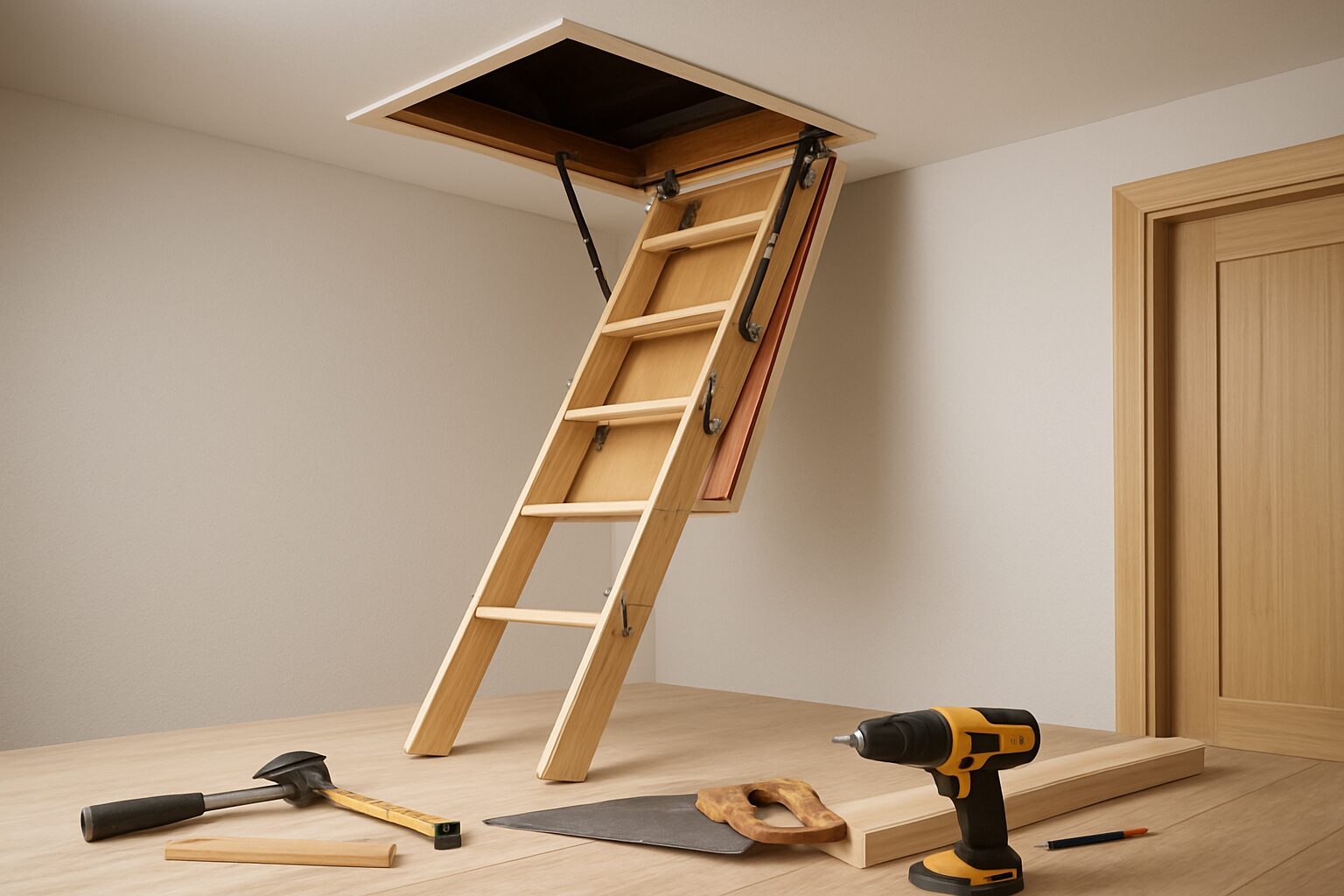
Falls from ladders remain one of the most common causes of serious injury in the home. According to the Royal Society for the Prevention of Accidents (RoSPA), ladder-related falls account for thousands of emergency hospital admissions each year in the UK alone. A poorly fitted or incorrectly used loft ladder contributes directly to this statistic. Understanding what makes a loft ladders installation safe—and what warning signs to watch for—can protect your household and prevent unnecessary accidents.
What Safety Standards Apply to Loft Ladders in the UK?
The primary standard governing loft ladder safety in the UK is BS EN 14975:2006, which covers:
Minimum load-bearing capacity (typically 150 kg)
Tread dimensions and slip resistance
Structural integrity under repeated use
Clear labelling and installation instructions
Professional installers are trained to work within these guidelines. DIY installations frequently overlook these requirements, particularly around load distribution and hatch reinforcement.
How Common Are Loft Ladder Accidents?
The data paints a clear picture. The Health and Safety Executive (HSE) reports that falls from ladders are among the leading causes of workplace fatalities, and the same risks apply in domestic settings. Loft ladders are particularly hazardous because:
They’re often used while carrying boxes or bulky items
Many are installed without adequate handrail support
Older ladders may have degraded hinges or worn treads
Regular inspection and proper use dramatically reduce these risks.
What Are the Most Commonly Asked Safety Questions?
What weight capacity should a loft ladder have?
Most residential loft ladders are rated for 150 kg. If the loft will be used frequently for heavy storage or by multiple users, opt for a model rated at 200 kg or above.
How do I know if my loft ladder is correctly installed?
The ladder should sit flush against the hatch frame, operate smoothly without resistance, lock securely in the open position, and show no flex or movement when loaded. If any of these conditions aren’t met, arrange a professional inspection.
What maintenance reduces the risk of accidents?
Lubricate hinges twice a year, tighten any loose fasteners, inspect treads for cracks or wear, and test the locking mechanism before each use. Replace worn components immediately.
Should loft ladders have handrails?
Yes. A handrail on at least one side is strongly recommended, and dual handrails are preferred for users carrying items or those with reduced balance.
At what angle should a loft ladder be installed for safe use?
The optimal angle for most loft ladders is between 60° and 70°. Steeper angles reduce stability; shallower angles increase the space the ladder occupies when deployed.
Are there anti-slip measures built into modern loft ladders?
Yes. Most contemporary designs include grooved or rubberised tread surfaces. Check the product specification to confirm anti-slip ratings before purchase.
What are the signs that a loft ladder needs replacing?
Visible cracks in timber sections, corroded or stiff hinges, worn tread surfaces, or a hatch that no longer seals properly are all indicators that replacement is overdue.
How should children’s access to loft ladders be managed?
Fit a secure latch or lock on the hatch to prevent unsupervised access by children. Some models include built-in locking mechanisms for this purpose.
Prioritise Safety at Every Stage
From the moment you select a ladder type to the day a professional installs it, safety should be the overriding consideration. No storage convenience or cost saving justifies compromising on structural integrity. Work with a qualified installer, follow the manufacturer’s guidance, and carry out routine maintenance checks to keep your household safe year-round.